Synopsis
J&K’s stunning Ranji Trophy win last month should elicit more than just cheers. Can cricket become a new force to industrialise the Union territory where all else has failed? The potential is astonishingly high.
Industrialisation is essential to create jobs and reduce youth alienation there. But conventional attempts through subsidies and public sector investments have achieved little, while breeding corruption and waste.
Kashmir lacks conventional industrial raw materials. It lies in a remote corner of India with no market to its north, west or east. Connections with consumer markets to its south with the rest of India are dismal. Industrialists avoid J&K because of risks of terrorism, wars with Pakistan and political uncertainties.
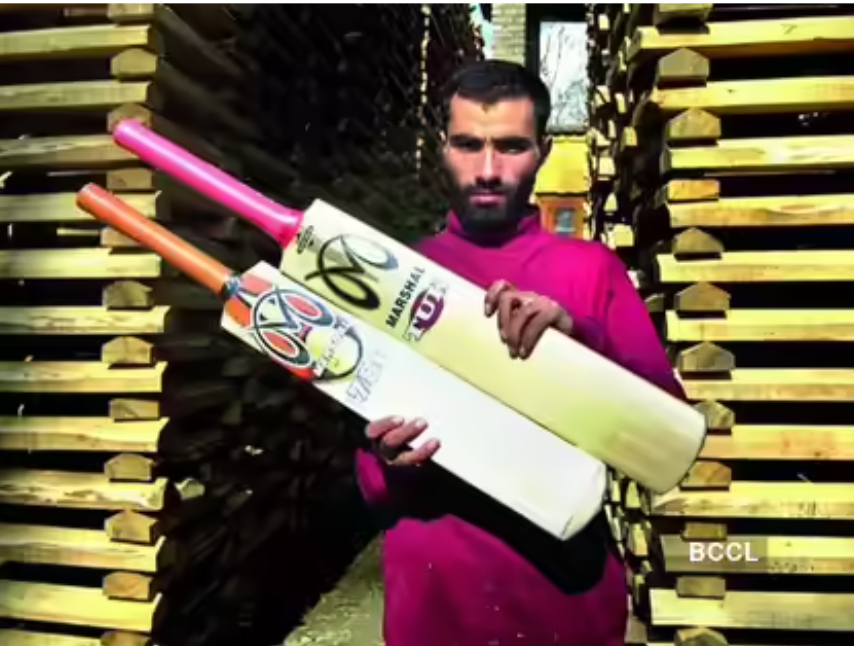
Yet, Kashmir possesses one natural advantage: it’s the only place in the world, save England, that grows the variety of willow trees needed for cricket bats. English willow is the best in quality. So, English bats are very expensive and unaffordable for the millions of people playing cricket in developing countries. That leaves bulk of the market to India.
Britain’s Gunn & Moore sells bats online for $265. By contrast, bats made from Kashmir willow can be dirt cheap. One online offering is for just ₹120 ($1.30). Kashmir can hugely increase its value addition by ensuring quality.
Kashmir’s natural willow stands have been shrinking ominously to meet roaring demand. Farm forestry is possible. But willows take up to 30 yrs to mature. So, farm foresters prefer the fast-growing poplar. Kashmir’s forest management is notoriously corrupt and incompetent. The region has ample wetlands and riverbanks suitable for willow cultivation.
GoI must launch a scheme in mission mode, with private sector partnership. That will increase willow supplies sufficiently to increase bat production 10x on a sustainable basis. Demand for bats is rising with rising incomes increasing the number of households that can afford to buy a Kashmir willow bat.
Kashmir’s production of willow clefts for bats has reportedly increased from 3 lakh to 30 lakh in the last decade. The vast majority of clefts are converted into bats in two manufacturing hubs, Jalandhar in Punjab and Meerut in UP.
Top companies there – Sareen Sports (SS), Sanspareil Greenlands (SG), BD Mahajan (BDM), MRF, etc – have over decades developed a global reputation for quality. They produce high-end bats (using both English and Kashmiri willow) and medium-end ones, and have become major exporters.
A cricket bat is a carefully engineered product. The cleft must be repeatedly machine-pressed to improve durability and strength, the blade shaped precisely, and the handle (made of South Indian cane) attached securely. Developing such capabilities in Kashmir will not be easy. Existing Kashmiri companies have poor reputations.
Ideally, Jalandhar and Meerut companies will have to be induced to manufacture in Kashmir through capital subsidies and preferential supplies of willow, and partnerships with the UT government in willow plantations. These companies have a deep long-term interest in increased willow supplies of assured quality.
But like all businessmen, they’ll avoid locations where infrastructure is poor, and agitations and violence can disrupt production and profitability. This means Kashmir Valley is unsuitable, in the short run at any rate, for a new initiative. But Jammu has stable conditions and good transport infra and can become a manufacturing hub.
Rise of lucrative T20 leagues has made cricket very attractive to young players, offering enormous financial rewards and global visibility. This has sparked rapid proliferation of cricketing academies and coaching centres, now a significant service industry.
Jalandhar and Meerut have shown that once a cricket bat manufacturing cluster emerges, a wide range of ancillaries will follow. Cricket balls are hand-stitched, requiring skilled labour that’s very expensive in England but inexpensive in India. Protective gear such as pads, gloves and helmets are important ancillaries. So are stumps, cricket shoes and training equipment.
The potential global market is enormous. The sport is spreading to new countries as shown by their participation in this year’s T20 World Cup. South Asian diasporic US has the maximum potential.
In India as well as Pakistan, manufacturing hubs for one sport lead in time to diversification into equipment for multiple sports. Sialkot began with hand-stitched footballs and gradually expanded into equipment for cricket and other sports. Cities in J&K can do the same.
The task will take time and effort. But Kashmir’s unique raw material advantage in willow must become the launching pad for its emergence as a global quality sports equipment producer that employs millions.
This article was originally published by The Economic Times on Mar 10, 2026.