Viagra Online

The Times of India

Al-Qaida is already here

Some time ago, the New York Times columnist Thomas Friedman posed the question, why do Muslims join Al-Qaida in so many Arab countries but not in India? The answer, he said, lay in India being a secular democracy. In autocracies across the Arab world, protest against local oppressors was sublimated into protest against the US, More >

George Bush is smiling

As a frequent visitor to the US, I can say that most Indians do not have the foggiest idea of American attitudes and trends following the Iraq war. Many Indians ask me whether President George Bush is in serious political trouble because of the death of almost one soldier per day in Iraq, and whether More >

Serving beef at Ayodhya

Although the BJP and Congress Party both seem keen on banning cow slaughter throughout India, it looks as though dissent from other parties has blocked the move for the time being. Some critics protest that cow worship is a strictly Hindu idea that must not be imposed on others in a secular state. I agree. More >

Financial story of our independence

Another Independence Day has come and gone. Right through history, imperial powers have clung to their possessions to death. Why, then, did Britain in 1947 give up the jewel in its crown, India? For many reasons. The independence struggle exposed the hollowness of the white man’s burden. Provincial self-rule since 1935 paved the way for More >

Perverted white man’s burden

The British Raj believed in the white man’s burden. Rudyard Kipling saw Indians as “lesser breeds without the law”, of whom no decent standards could be expected. But he saw the white man as a superior species, of whom the highest standards should be expected. I find an eerie echo of this in the row More >

Who is migrating where?

Intellectuals sometimes say Western countries are hypocrites who extol free movement of goods and capital, but control free movement of people through visas. True, but our own curbs against Pakistani and Bangladeshis are no less stringent. Nor do our neighbours want migrants from India. Resistance to immigrants is near-universal. The question remains, how many people More >

Brahmins, banias and Vikram Seth

Vikram Seth has received a phenomenal 1.3 million pounds as an advance for his next book. No longer are authors typically starving idealists. Today, the successful ones are millionaires armed with tax and investment advisors. Even those claiming to disdain commerce squeeze the maximum out of film rights and other commercial issues when drawing up More >

Delusions of regional grandeur The Times of India, July 20, 2003

Dear Jaswant Singh, You were doubtless grieved by the Cabinet’s decision not to send troops to Iraq. So too were others who share your view of India as a regional power that acts as an arbiter or peace. But all is not lost. Let me offer you a large regional agenda that can establish India’s More >

Tale of two divestments

The good news is that Maruti’s initial public offer (IPO) of shares was vastly oversubscri-bed. Its stock market price has gone up to Rs 175 against a subscription price of Rs 125, yielding a handsome profit to small investors who dominated the issue. The bad news is that some people are misinterpreting this to mean More >

Retailing: The magic word for Punjab

Dear Capt Amarinder Singh, I regret I could not attend the Punjab government workshop this week on reviving Punjab’s economy, focusing on a second green revolution based on fruits and vegetables. But let me share with you an insight from Harvard scholar Peter Timmer. Encourage global retail chains to set up huge supermarkets — called More >

How to revive investment

Many things have improved in India since the reforms of 1991, but not the country’s investment rate. Investment is profitable, and corporate profits rose by over 50 per cent last year. Yet, investment refuses to take off, despite many incentives from many ministers. So let me suggest an alternative line of attack: reduce the shareholding More >

Unanticipated consequences of FDI

The conventional argument for foreign direct investment (FDI) is that it brings in foreign exchange. The conventional argument against FDI is that it displaces domestic manufacturers. Both arguments are mainly wrong. Above all, FDI brings in knowledge and marketing links that can create comparative advantage where none existed before. These unanticipated consequences of FDI are More >

Don’t expect fresh US wars

Will the US now attack Iran? Or Syria or North Korea? Learned articles are being written about this, but most are based on foreign policy considerations alone. In fact decisions are taken by politicians with very private agendas. President Bush’s main aim today is to ensure he gets re-elected next year. That event may seem More >

You cannot legislate away poverty

Of all the proposals I have heard to abolish poverty, the simplest comes from a friend in an NGO. Why not raise the minimum wage high enough to put everybody above the poverty line? It sounds so simple, elegant and painless. Alas, it will not work because of the law of unintended consequences. I was More >

How hungry are Indians?

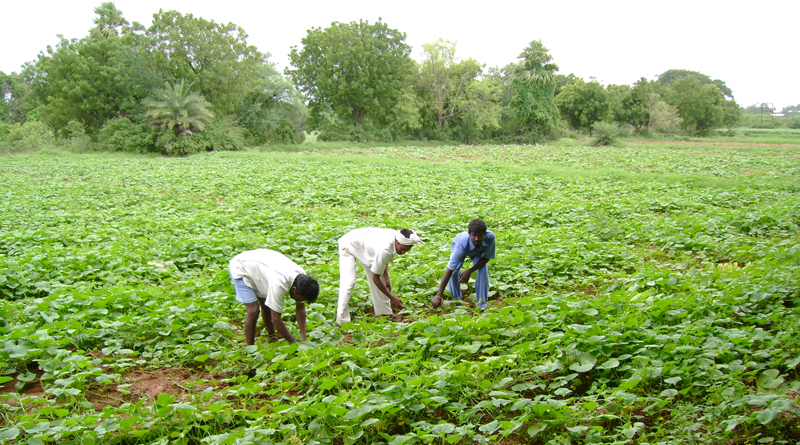
The monsoon is about to arrive, and people are anxiously scanning the skies. Two of the last three years have seen poor rains, and the drought last year was the worst for decades. How bad is the hunger caused by such deprivation? Roughly a quarter of the population remains below the poverty line. Readers may More >